
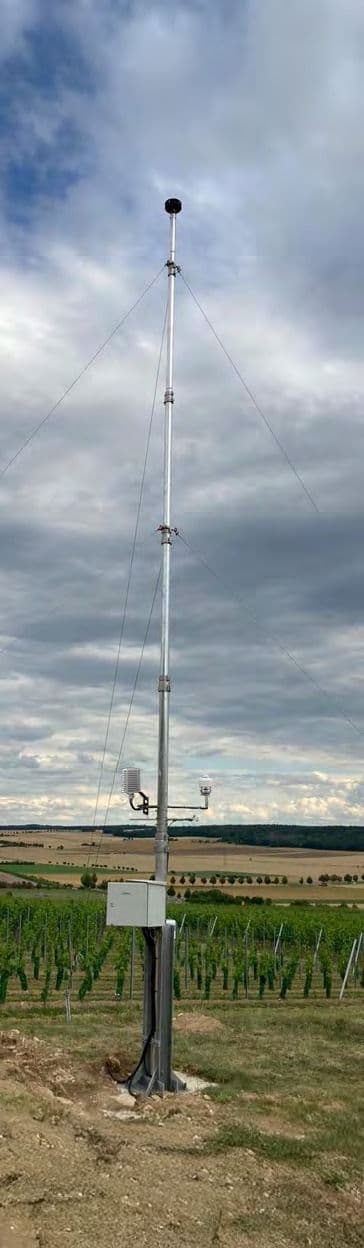
Reliable weather data for critical decisions
Designed to meet stringent World Meteorological Organization (WMO) and International Civil Aviation Organization (ICAO) standards, the Apex weather station is suited to meteorological and aviation applications where dependable measurements matter.
Its scalable design supports evolving monitoring requirements, helping organisations maintain high-quality weather observations and share data with regional and global partners.
Key benefits
Standards-led monitoring
WMO- and ICAO-compliant data for demanding meteorological and aviation applications.
Connected data
Share weather observations with regional and global partners to support collaboration.
Reliable performance
Continuous, accurate measurements with a focus on high performance and low upkeep.
Scalable system
A future-focused platform designed to accommodate evolving monitoring standards and requirements.
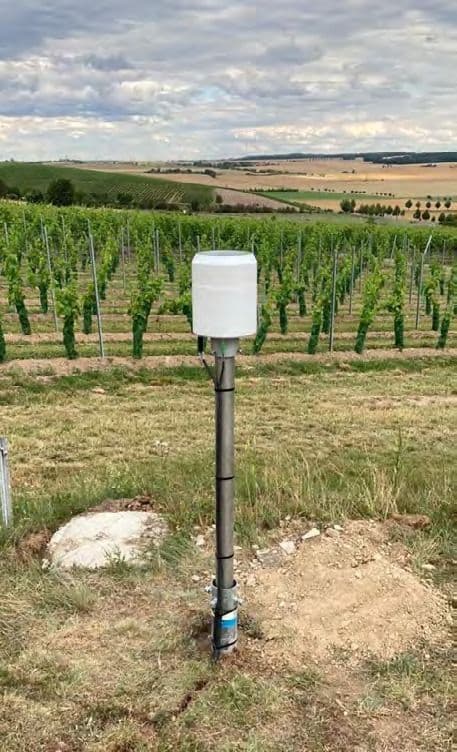
Built for demanding environments
Apex is designed for organisations that depend on consistent, high-quality weather observations. Its applications range from national meteorological services and regional monitoring networks to research, energy, aviation and utilities.
The system combines specialised sensors, data logging and communications to support dependable weather monitoring and data distribution.
Who is Apex for?
National weather services
National Meteorological and Hydrological Services (NMHS) requiring dependable observation data.
Research and monitoring networks
Regional mesonets and research institutions conducting climate and weather monitoring.
Industry and infrastructure
Private-sector organisations in energy, aviation and utilities.
Supporting early warning and risk management
Accurate environmental observations can support early warning systems, climate research and informed operational decisions. Weather monitoring systems can be used by agencies, services and communities for applications including severe weather, wildfire and flood-risk management.
Combined with appropriate monitoring networks and data tools, Apex can form part of a wider environmental intelligence system.

A complete automated weather station
The Apex system brings together dedicated measurement instruments, a controller and communications equipment to collect and transmit weather data.

Technical specifications
The Apex datasheet identifies the following sensors and measurement specifications.
u[sonic] — Ultrasonic wind sensor
| Wind direction | Less than 2° RMSE at wind speeds above 1 m/s |
| Wind speed below 10 m/s | ±0.2 m/s RMSE |
| Wind speed from 10 to 65 m/s | ±2% RMSE |
| Measuring frequency | Up to 120 Hz |
rain[e] — Rain gauge
| Rainfall accuracy below 6 mm/min | ±0.1 mm or 1% |
| Rainfall accuracy at or above 6 mm/min | ±2% |
| Load cell accuracy | 10 mg, equivalent to 0.0005 mm as stated in the datasheet |
sun[e] — Solar radiation
| Instrument | Secondary-standard pyranometer |
THP[pro] — Temperature, humidity and pressure
| Air temperature, 0°C to 60°C | ±0.1 K |
| Air temperature, −40°C to 0°C | ±0.2 K |
| Air temperature, 60°C to 70°C | ±0.2 K |
| Relative humidity | Typically ±1% in the 20–70% RH range, as reported in the datasheet |
| Pressure accuracy | Typically 0.15 hPa over 700–1100 hPa |
| Pressure sensors | Three independent pressure sensors |
Specifications are reproduced from the supplied Apex datasheet. Please refer to the datasheet for configuration and specification details for a particular installation.
Data logging and communications
The Apex system supports secure data transfer and integration with monitoring infrastructure. The datasheet identifies the following capabilities:
- Ser[LOG] data logger with 4G modem
- TLS 1.3 support
- Dual modem/server capability
- Modbus, Ethernet and RS485
- SFTP, FTPS and HTTPS data transfer
- Mobile and SMS options
- Virtual formulas and configurable data handling
Apex Automated Weather Station
Find out more about the Apex Automated Weather Station, its measurement capabilities and technical specifications in the product datasheet.